

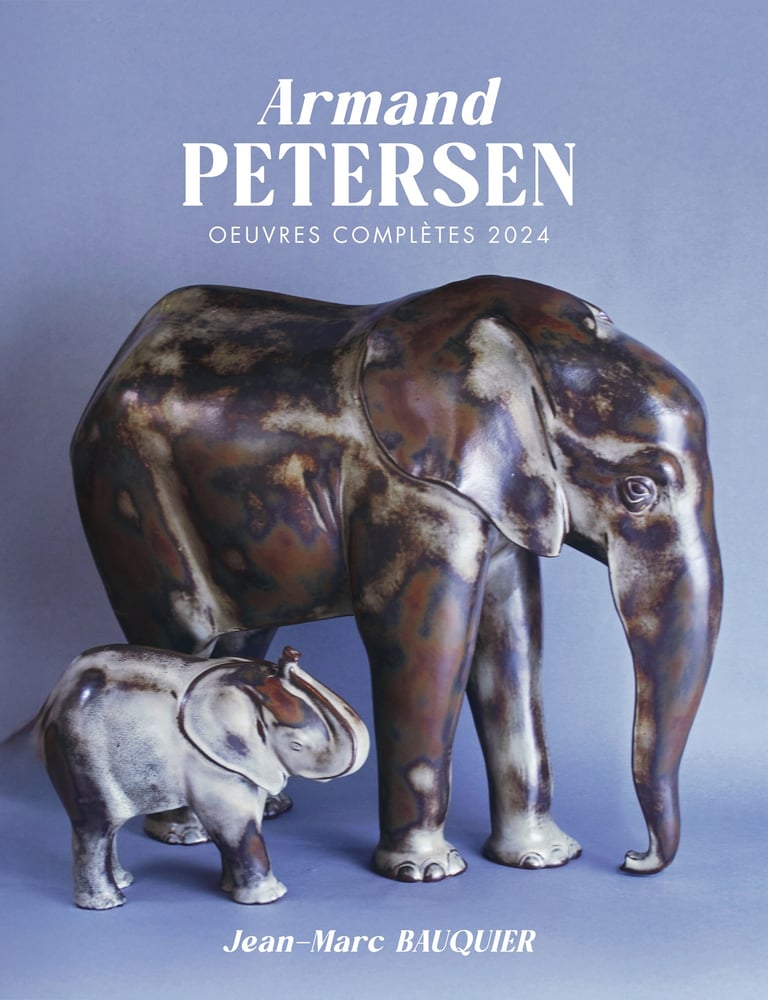

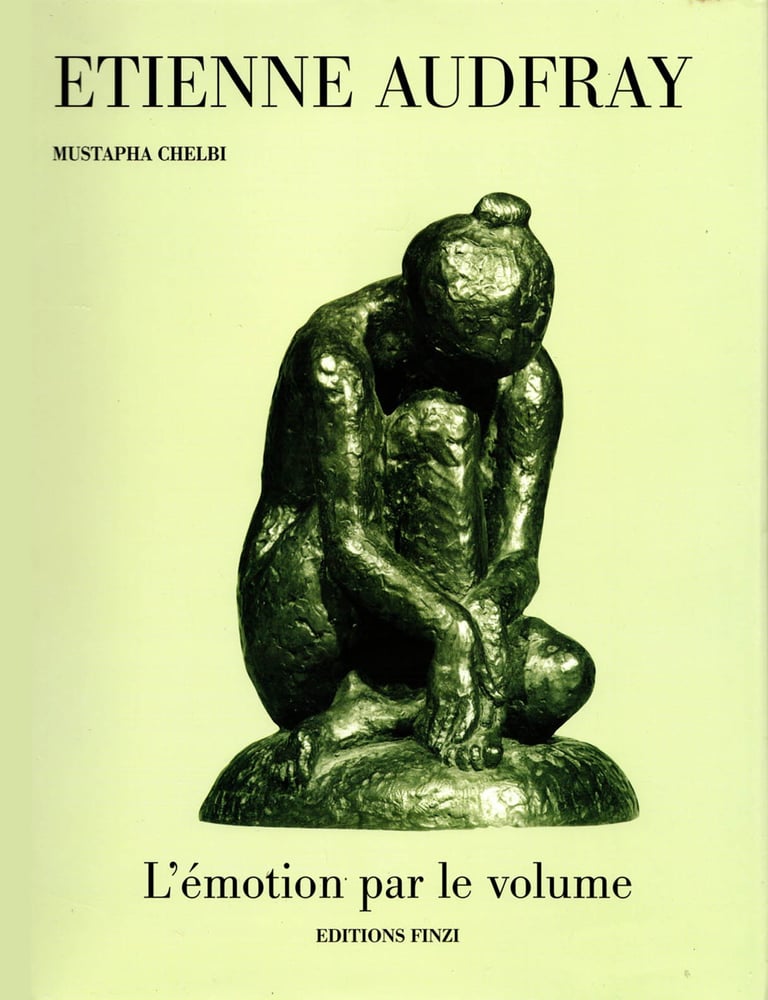
ArtSga is dedicated to literature on the animal sculptor Armand PETERSEN (1891–1969) and the portrait sculptor Etienne AUDFRAY (1923–2017).
ArtSga is dedicated to literature on the animal sculptor Armand PETERSEN (1891–1969) and the portrait sculptor Etienne AUDFRAY (1923–2017).
It primarily features catalogues raisonnés and their supplements, monographs, and other upcoming publications.
Armand Petersen was born on 25 November 1891 in Basel (Switzerland). He enrolled at the School of Industrial Arts in Geneva, in the goldsmithing and engraving class.
In 1914, Petersen arrived in Paris to continue his studies.
By 1924, animal sculpture was in full swing. Pompon, who had made his name in 1922 with his large White Bear, gathered young animal sculptors at the Jardin des Plantes to study live models.
Edgard Brandt, the owner of an art gallery, took notice of him. Petersen found himself alongside Sandoz, Bigot, Artus and Pompon. Critics took notice of this new artist, who made his mark through his independence and originality, distinguished by the sense of unease conveyed by his animals, which are always on the alert.
By 1929, Petersen was among the finest animal artists. He was mentioned after Pompon and described as his emulator.
Brecy wrote, “Petersen, an emulator of Pompon, who produces nothing but masterpieces... ” and further on notes, “The Timid Antelope is a small masterpiece carved with such tenderness that the whole life of this little creature is portrayed as touching and true.”
Yvon Lapaquellerie writes, “He works his material as preciously as gold. There is something religious about Petersen’s art, and it is this spirituality, which permeates his work, that gives it such a rare character and sets it apart from the work of other animal sculptors”.
In July 1950, his wife died of cancer. Deeply affected, he decided to continue his work by moving to Nogent, to the Maison des Artistes.
On 21 July 1954, the State acquired the large ‘Deer’, which was donated to the Louviers Museum. There is also a ‘Hippopotamus’ from the Louvre Museum on loan to the Vernon Museum, a ‘Grey Crane’ at the Hunting Museum in Gien, and a ‘Bull’ at the Angers Museum.
1959 was the year he met Etienne Audfray. He died on the operating table on 20 September 1969 after bequeathing his studio to his friend, as Petersen had no descendants.
Highly sought-after on the art market, his works feature in major international exhibitions such as the Biennale des Antiquaires, TEFAF Maastricht and PAD Paris Tuileries.
Today, Armand Petersen is recognised as one of the ten greatest animal sculptors of the first half of the 20th century.
Etienne Audfray was born on 10 March 1922 in Combrée, in the Maine-et-Loire department (France).
Born into a large family, at the age of 17 he was taken on by a surveyor. During the Second World War, he was captured by the Germans and found himself digging trenches all the way to the Russian front. Released in 1945, he returned to France and got married. He worked for the land registry.
He enrolled in the studio of Picard, then Severac, and finally Petersen, of whom he would later become the sole heir.
In 1959, he joined the municipal council of Bry-sur-Marne, was elected Mayor in 1965, and then became a General Councillor in 1973. In 1974, he took over the National Salon of Animal Artists, serving as its president for twenty-six years.
In 1981, he was made a Knight of the National Order of Merit.
He joined the Federation of the Grand Palais’s Historical Salons as Treasurer, then became Vice-President of the Salon des Artistes Français, and was elected President of the Société Nationale des Beaux-arts from 1998 to 2004, giving it an international profile through exhibitions at the Carrousel du Louvre.
Finally, as Mayor of Bry-sur-Marne, he proposed in 1974 to host the National Salon of Animal Artists, of which he served as President for twenty-six years.
Etienne Audfray does not work from photographs but from models who come to pose in his studio.
As a portraitist, he produced a large number of busts of politicians, including those of Robert Schuman, Olivier d’Ormesson and Jean-Marie Poirier; writers such as Chelini and Hector Malo; famous painters, including Galliègue, Benn, Gualtiéri and Menguy, churchmen such as the Bishop of Provenchères, and many other more intimate works.
Etienne Audfray has created numerous monumental works and public monuments (squares, fountains, war memorials) in France, South Korea and elsewhere...
As is often the case, the woman is an allegory. He displays a marked preference for the female form, which has always inspired him. His works illustrate her beauty and soft curves; the profiles are harmonious, and the handling of light is essential to understanding his work.
We could not conclude better than by quoting him: ‘Just as the poet moves us with words, the sculptor moves us with form.’